
A Practical Guide to Selecting Agro Shade Nets for Gujarat’s Farming Conditions
Agriculture in Gujarat faces different environmental conditions throughout the year, including intense summer sunlight, changing temperatures, seasonal rainfall, and varying crop requirements. Farmers and nursery owners need suitable protection methods to maintain healthy growing conditions. Agro shade nets are widely used to manage sunlight exposure and create shaded environments for plants, seedlings, and agricultural crops.
Choosing the right Agro Shade Net in Gujarat requires more than selecting a net based on its colour or appearance. Important factors include shade percentage, material quality, UV stabilization, GSM, size, and the type of plants being grown. Selecting suitable specifications can help farmers manage sunlight while maintaining the light needed for plant development.
Whether you operate a vegetable farm, commercial nursery, greenhouse, or horticultural unit, understanding these factors can help you make an informed purchasing decision.
What Is an Agro Shade Net and Why Is It Used in Agriculture?
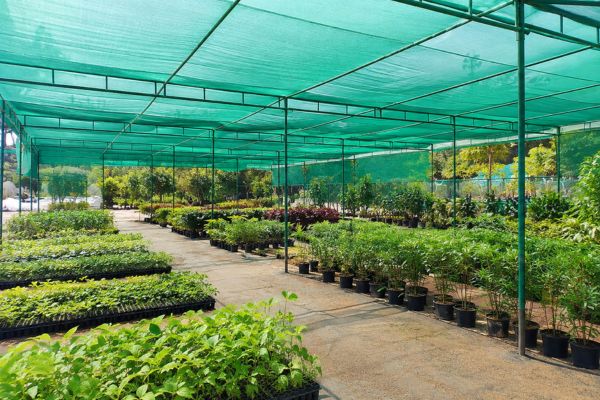
An agro shade net is a specially manufactured netting material used to reduce the amount of direct sunlight reaching plants and agricultural growing areas.
Most agricultural shade nets are manufactured using High-Density Polyethylene (HDPE), which offers lightweight construction and suitability for outdoor applications.
Depending on the shade percentage and net construction, these nets help create a more controlled environment for plant growth.
Farmers use agricultural shade nets for several purposes, including reducing excessive sunlight exposure, protecting sensitive seedlings, shading nurseries, and supporting selected horticultural applications.
In Gujarat, where summer conditions can be challenging for certain crops and young plants, shade nets can be an important part of agricultural planning.
However, the correct shade level depends on crop type, growing stage, season, and local climate.
How to Choose the Right Shade Percentage for Different Crops
Shade percentage is one of the most important factors when selecting an agricultural net.
It indicates the approximate proportion of sunlight blocked by the material under specified measurement conditions. A higher shade percentage generally allows less direct sunlight to pass through.
Different plants have different light requirements, so selecting the correct percentage is essential.
35 Percent Shade Net
A 35% shade net provides relatively light shading while allowing a substantial amount of sunlight to reach the growing area.
It may be considered for applications requiring mild sunlight reduction, depending on the crop and local conditions.
This option can be useful where growers want limited shading rather than a heavily covered environment.
50 Percent Shade Net
A 50% shade net provides a moderate level of shading and is commonly considered for nursery and horticultural applications.
It may be suitable for certain plants that benefit from reduced direct sunlight.
Farmers should confirm the required light levels before using this shade percentage for a particular crop.
75 Percent Shade Net
A 75% shade net provides heavier shading and may be useful for selected shade-loving plants, sensitive nursery stock, and non-crop shading applications.
Because it substantially reduces incoming light, it is not appropriate for every agricultural crop.
Its suitability should be assessed according to the plants’ actual sunlight requirements.
90 Percent Shade Net
A 90% shade net provides very high shading and is generally more appropriate for specialized shade requirements, selected plant applications, or areas needing strong sunlight reduction.
It may restrict too much light for many food crops, particularly those requiring strong sunlight for healthy growth.
Before selecting any shade percentage, farmers should consult crop-specific guidance or an agricultural specialist.
How to Choose the Right Shade Percentage for Different Crops
Material quality influences the performance and handling of agricultural shade nets.
HDPE is commonly used because it is lightweight, flexible, and suitable for manufacturing durable netting products.
A well-manufactured HDPE agro shade net should provide consistent construction and meet the required specifications for its intended application.
When selecting a net, buyers should check the quality of the raw material, knitted structure, available gauge, and product specifications.
Netvel Enterprise offers Krishi Net manufactured using 100% virgin HDPE with knitted monofilament and tape netting construction.
The product range includes different shade percentages, GSM options, gauges, and sizes to meet varying agricultural requirements.
Importance of UV Stabilized Shade Nets for Gujarat’s Climate
Agricultural shade nets are frequently exposed to sunlight for extended periods.
Continuous ultraviolet exposure can gradually affect the properties of some plastic materials, especially when they are not designed for outdoor use.
UV stabilization helps improve the material’s resistance to sunlight-related degradation.
For farmers in Gujarat, selecting UV-stabilized shade net material can be beneficial for applications involving repeated or prolonged outdoor exposure.
However, actual service life depends on material formulation, installation, weather conditions, handling, and maintenance.
Buyers should confirm UV treatment and other relevant specifications with their agro shade net supplier before purchasing.
Understanding GSM and Gauge Before Buying Shade Nets
GSM stands for grams per square metre and represents the weight of the net material over a specified area.
It is an important specification when comparing agricultural netting products.
A higher GSM indicates more material weight per square metre, but it does not automatically mean the net is better for every application.
Net construction, shade percentage, material quality, and installation requirements should also be considered.
Gauge is another product specification that may describe characteristics of the netting construction, depending on the manufacturer’s system.
Netvel’s Krishi Net range includes multiple GSM options and 6, 9, and 12 gauge variants.
Farmers and agricultural dealers should select these specifications based on the intended application rather than comparing weight alone.
Choosing the Right Shade Net Size for Farms and Nurseries
Selecting the correct net size helps minimize unnecessary cutting, material wastage, and installation difficulties.
Before purchasing, farmers should measure the total area requiring coverage, including length, width, structure height, and any additional material required for fastening.
For example, a commercial nursery may need continuous coverage across several growing sections, while a smaller farm may require shading over specific crop beds.
Netvel Enterprise offers agricultural shade nets in multiple roll widths and lengths, including options ranging from 1 metre to 6 metres in width within its Krishi Net range.
Buyers should confirm available roll sizes, quantities, and installation requirements before placing an order.
Proper installation is also important because poorly secured nets may be damaged by strong winds or structural movement.
Agro Shade Net Applications Across Gujarat
Agricultural shade nets can be used for several farming and horticultural applications.
Farmers in Ahmedabad, Vadodara, Surat, Rajkot, Anand, Mehsana, Bharuch, and other parts of Gujarat can evaluate these applications according to their regional climate and crop needs.
Common Mistakes to Avoid When Selecting Agricultural Shade Nets
One common mistake is choosing a shade net only by colour without checking its actual shade percentage.
Another is assuming that a higher shade percentage always offers better crop protection.
Excessive shading may reduce the light available for photosynthesis and affect plant development.
Buyers should also avoid ignoring UV treatment, GSM, construction quality, and roll dimensions.
Incorrect installation can create problems such as loose netting, uneven coverage, and damage during windy conditions.
For commercial farming operations, it is important to evaluate product specifications carefully and choose a net suitable for the intended agricultural application.
Why Choose Netvel Enterprise for Agro Shade Nets in Gujarat?
Selecting a reliable agro shade net manufacturer and supplier is important for farmers, nurseries, dealers, and agricultural businesses seeking consistent product specifications.
Netvel Enterprise, based in Ahmedabad, Gujarat, manufactures and supplies polymer netting solutions for agricultural, industrial, commercial, and other applications.
Its Agro Shade Net product category includes Krishi Net, Tulsi Net, and Decoration Net.
The Krishi Net range offers 35%, 50%, 75%, and 90% shade options, UV-stabilized HDPE construction, multiple GSM and gauge specifications, different colours, and various roll sizes.
Netvel also serves wholesalers, distributors, farmers, nurseries, and commercial buyers requiring agricultural shade net products.
Customers can discuss shade percentage, application, roll size, and quantity requirements to identify available options.
Conclusion
Choosing the right Agro Shade Net in Gujarat requires careful consideration of shade percentage, crop requirements, HDPE material, UV stabilization, GSM, size, and installation conditions.
A suitable shade net can help farmers manage sunlight exposure, protect sensitive growing areas, and support better environmental management for selected agricultural applications.
Rather than choosing a product based only on appearance or shade density, farmers should evaluate the actual needs of their plants and growing structures.
Looking for an Agro Shade Net Manufacturer and Supplier in Gujarat? Connect with Netvel Enterprise to explore Krishi Net options and discuss shade percentages, roll sizes, and bulk agricultural net requirements.
FAQs
Netvel Enterprise is an agro shade net manufacturer and supplier based in Ahmedabad, Gujarat. Its agricultural net range includes Krishi Net with different shade percentages, UV-stabilized HDPE construction, GSM specifications, colours, and roll sizes for farming and nursery applications.
The best shade percentage depends on the crop, growing stage, season, and local climate. Options such as 35%, 50%, 75%, and 90% provide different levels of sunlight reduction. Farmers should choose a suitable percentage based on crop-specific light requirements rather than selecting the highest shade level.
Farmers, nurseries, dealers, and wholesalers can enquire with Netvel Enterprise in Ahmedabad for HDPE Agro Shade Net in Gujarat. Buyers should provide the required shade percentage, GSM, roll dimensions, application, and quantity to confirm suitable product options.
UV-stabilized agro shade nets are designed to resist sunlight-related material degradation during outdoor use. They can provide practical shading for suitable crops, nurseries, and horticultural applications. Actual performance depends on material quality, exposure conditions, and installation.
A 50% agro shade net may be suitable for certain nursery plants requiring moderate sunlight reduction. However, different plant varieties have different light needs. Nursery owners should consider the plants, seasonal conditions, and cultivation requirements before choosing this option.
Yes. Netvel Enterprise caters to dealers, distributors, wholesalers, farmers, and commercial buyers seeking agro shade nets. Customers can enquire about bulk quantities, available product specifications, roll packaging, and supply requirements for agricultural applications.
Before selecting an Agro Shade Net Supplier in Gujarat, check material quality, shade percentage, UV stabilization, GSM, net construction, roll dimensions, product availability, and suitability for your farming application. A reliable supplier should provide clear specifications and help you identify appropriate options.
